

Where Innovation Meets Digital Excellence! Tagscripts Digital Transforming businesses with cutting-edge SEO, PPC, and social media performance mastery by data-driven strategies and personalized solutions tailored just for you.

Branding vs Marketing: What’s the Difference and Which Comes First?

Tagscripts
November 05, 2026
Branding vs Marketing: What’s the Difference and Which Comes First?
Branding and marketing are two essential parts of building a successful business. While both help businesses attract customers and grow, they serve different purposes. Understanding the difference between branding vs marketing helps businesses create a clear identity and communicate their value effectively.
Branding focuses on how people recognize, perceive, and remember your business. Marketing focuses on promoting your products or services, reaching potential customers, and generating sales.
Although these two concepts work together, knowing which one comes first can help you build a stronger business foundation.
Here is a practical breakdown of branding and marketing, their differences, and how to use them together.
1. Understand What Branding Means
Branding is the process of creating a unique identity and perception for your business. It defines how customers recognize your company and what they associate with your products or services.
It goes beyond your logo and colour palette. Branding includes your business values, personality, communication style, and overall customer experience.
Important elements of branding include:
• Brand name and logo
• Visual identity and typography
• Brand voice and messaging
• Mission, vision, and values
• Brand positioning
• Customer experience
How to Build It:
Start by defining what your business stands for, who you want to reach, and what makes your offering different.
Develop consistent visual guidelines and messaging that communicate your brand personality across your website, social media, packaging, and other customer touchpoints.
2. Understand What Marketing Means
Marketing refers to the activities businesses use to promote their products or services, connect with potential customers, and achieve business objectives.
It helps businesses communicate their offerings to the right audience through different channels and strategies.
Common marketing activities include:
• Social media marketing
• Search engine optimization (SEO)
• Content marketing
• Email marketing
• Google Ads
• Performance marketing
• Influencer marketing
How to Build It:
Identify your target audience, understand their needs, and choose marketing channels that help you reach them.
Create a marketing plan with clear objectives, relevant content, promotional activities, and measurable performance indicators.
3. Branding vs Marketing: Understand the Key Differences
Although branding and marketing work towards business growth, their primary objectives are different. Branding establishes your business identity, while marketing communicates that identity to potential customers.
Here are the key differences:
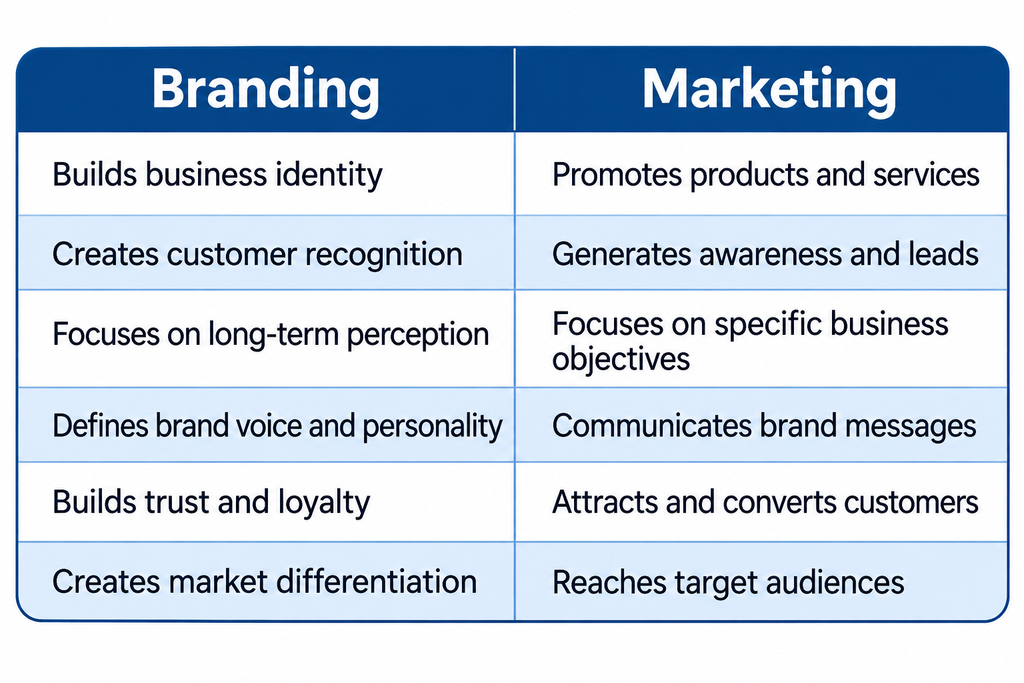
Both are important for building a recognizable business and maintaining customer relationships.
4. Understand Why Branding Should Come First
Before promoting your business, you need a clear identity that customers can recognize and understand. Without defined branding, marketing campaigns may communicate inconsistent messages.
A strong brand identity gives your marketing activities a consistent direction.
Branding helps you:
• Establish a clear market position
• Differentiate from competitors
• Build customer trust
• Create consistent communication
• Develop long-term brand recognition
How to Fix It:
Define your brand positioning, audience, values, visual identity, and communication style before launching major marketing campaigns.
This gives your business a clear foundation for creating consistent promotional content across different channels.
5. Understand How Branding and Marketing Work Together
Branding and marketing are not separate activities. They support each other throughout the customer journey.
Branding creates the identity, while marketing communicates it through campaigns, content, and customer interactions.
For example, a premium skincare brand may use minimal packaging, elegant visuals, and a consistent brand voice to establish its identity.
Its marketing strategy can then use social media campaigns, influencer collaborations, SEO, and paid advertising to reach potential customers.
How to Align Both:
• Maintain consistent brand messaging
• Use recognizable visual elements
• Align campaigns with brand values
• Create relevant audience-focused content
• Ensure a consistent customer experience
A well-aligned branding and marketing strategy helps businesses create recognition while attracting the right customers.
6. Common Branding and Marketing Mistakes to Avoid
Businesses sometimes invest heavily in marketing without establishing a clear brand identity. Others focus only on visual branding without creating strategies to reach potential customers.
Both approaches can limit business growth.
Avoid these common mistakes:
• Running campaigns without clear brand positioning
• Frequently changing visual identity
• Using inconsistent brand messaging
• Ignoring customer expectations
• Choosing marketing channels without research
• Focusing only on likes and impressions
• Failing to measure campaign performance
How to Fix It:
Develop clear brand guidelines and a structured marketing strategy before launching promotional campaigns.
Review customer feedback, maintain consistent communication, and track relevant performance metrics to understand what is working.
7. How to Create a Balanced Branding and Marketing Strategy
A successful business needs both a recognizable identity and an effective promotional approach. Integrating branding and marketing helps create a consistent experience from the first interaction to long-term customer relationships.
Focus on these steps:
• Define your brand identity and positioning
• Identify your target audience
• Establish clear communication guidelines
• Select relevant marketing channels
• Create consistent content
• Plan promotional campaigns
• Monitor customer engagement and conversions
Review your strategy regularly to ensure your brand communication and marketing activities continue to support your business objectives.
Branding vs Marketing Checklist: What Should Your Business Focus On?
Before investing in business promotion, make sure you have:
• Defined your brand purpose and values
• Identified your target audience
• Created a consistent visual identity
• Established brand positioning
• Developed clear brand messaging
• Selected suitable marketing channels
• Prepared a content strategy
• Set measurable marketing objectives
• Established performance tracking methods
Completing these steps helps create a strong foundation for your branding and marketing strategy.
How Tagscripts Digital Marketing Agency Helps Businesses with Branding and Marketing
Building a successful business requires a clear brand identity and the right marketing approach. Without consistency between the two, businesses may struggle to communicate their value and connect with their target audience.
At Tagscripts Digital Marketing Agency, we help businesses strengthen their digital presence through strategic branding and marketing solutions.
Our services include:
• Brand positioning and communication
• Branding and visual identity
• Social media marketing
• Content marketing
• SEO
• Performance marketing
• Google Ads
• Website design and development
• Digital strategy
We help businesses create consistent brand communication and reach relevant audiences through the right digital channels.
Whether you are building a new brand or improving your existing marketing efforts, the right branding and marketing strategy can support stronger recognition, customer engagement, and long-term business growth.
Conclusion
Branding and marketing serve different purposes, but both are essential for business success. Branding defines who you are as a business, while marketing communicates your value to the right audience.
Ideally, branding should come first because it creates the foundation for consistent marketing activities. However, both should continue working together as your business grows.
Looking to strengthen your brand and marketing strategy? Connect with Tagscripts Digital Marketing Agency to build a consistent digital presence that helps your business stand out and grow.
FAQs
1. What is the main difference between branding and marketing?
Branding defines your business identity and how customers perceive it, while marketing promotes your products or services to attract and convert potential customers.
2. Which comes first, branding or marketing?
Branding generally comes first because it establishes your identity, positioning, and messaging. Marketing then uses this foundation to reach your target audience.
3. Can a business do marketing without branding?
Yes, but without clear branding, marketing communication may become inconsistent and less recognizable. A defined brand identity makes promotional activities more effective.
4. Why are branding and marketing important for business growth?
Branding builds recognition and trust, while marketing increases visibility and attracts customers. Together, they help businesses establish stronger market positions.
5. How often should businesses update their branding and marketing strategy?
Businesses should review their strategies regularly based on customer feedback, market changes, and performance. Major branding changes should be made when business goals or positioning evolve.
